What Delivery Businesses Should Look for in a Commercial EV Supplier
Delivery businesses operate under constant pressure from route timing, stop density, vehicle uptime, and customer expectations that leave almost no room for drift.
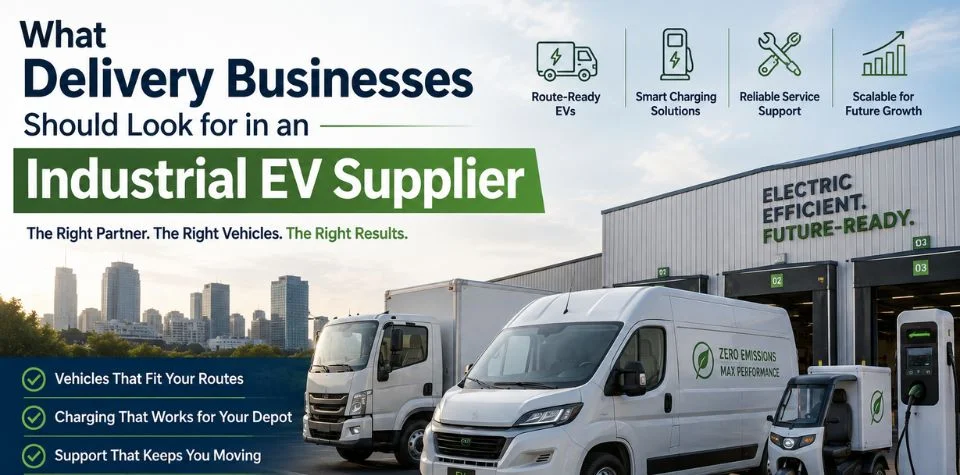
A commercial EV supplier affects all four of these areas, because the supplier shapes vehicle fit, charging readiness, service support, and the pace of rollout.
A strong supplier helps a fleet settle into daily use with minimal adjustment. A weak one creates extra work long after delivery is complete.
The right evaluation starts with the route, not the brochure.
Start With Whether the Vehicles Suit Delivery Work
Vehicle fit comes first because delivery work follows a very specific rhythm. Vehicles stop frequently, return to base on a set schedule, and operate within cargo, parking, and access limits that shape the entire working day.
When comparing industrial vehicle suppliers, it helps to focus on load space, door access, turning radius, charging behaviour, and driver comfort across repeated urban runs. These details tend to influence route speed more consistently than headline range figures ever do.
A vehicle that matches the route pattern usually creates fewer operational compromises once it enters daily service.
Check Whether Charging and Support Are Ready for Daily Use
Charging support matters because delivery fleets rely on repeatable routines. Depot charging, overnight turnaround, charger placement, and service response all need to fit the way vehicles already move through the business.
A useful supplier review often includes questions like these:
- Does the charging plan suit your depot routine and route schedule?
- Can the supplier support maintenance with clear diagnostics and parts access?
- Will the rollout process stay manageable if the fleet expands later?
- Will support remain responsive once the vehicles enter regular use?
These questions usually give a clearer picture of supplier readiness than product claims alone.
Assess Whether the Supplier Can Support Growth
A supplier may perform well during early conversations and still create pressure once order volume increases. Delivery businesses generally need consistent vehicle specs, stable lead times, and service support that stays reliable as more units join the fleet.
Some buyers also compare local options with an electric delivery scooters manufacturer to understand how more established commercial EV support models handle charging coordination, last-mile density, and after-sales service. That comparison is useful because it shifts the conversation from product talk to delivery discipline.
A stronger supplier usually combines vehicle supply with rollout planning and long-term support, rather than treating the sale as the end of the relationship.
Final Thoughts
A good commercial EV supplier improves more than the purchase process. Vehicle fit, charging readiness, service support, and supply consistency all shape how a fleet performs once real delivery work begins.
Our approach at 8Industrial follows that practical view. We support delivery vehicles and EV systems that need to make sense in daily operations, not only during procurement. If you are reviewing suppliers for your next delivery fleet move, get in touch with us and we can help you think through the route, the vehicle, and the charging setup together.
Popular Tags
- industrial vehicle manufacturer
- EV wholesaler
- industrial vehicle suppliers
- industrial vehicle
- electric delivery scooter
- delivery scooter suppliers
- ev scooter manufacturer
- delivery scooter manufacturer
- electric delivery scooter suppliers
- industrial vehicle distributors
- commercial EV supplier
- EV Suppliers